How to Shortlist a Home Battery PACK Supplier
How to Shortlist a Home Battery PACK Supplier
Most installer and distributor teams shortlist battery suppliers the way they buy cables: they email three factories, compare the price per kWh, and pick the middle quote. That works for commodity parts. It does not work for a component that has to survive fifteen years, pass an electrical inspector, and keep a homeowner warm during a grid outage.
The result of that shortcut is predictable. The first container arrives fine. Problems show up in year two, when a batch underperforms, the BMS firmware will not talk to the local inverter, or the certificate on file turns out to name a different model number than the one on the pallet.
|
|
A seven-check shortlist for installers, distributors and small EPCs
The order matters. The first three checks are cheap — an email and a PDF — and they will eliminate most suppliers before you spend a single hour on price negotiation.
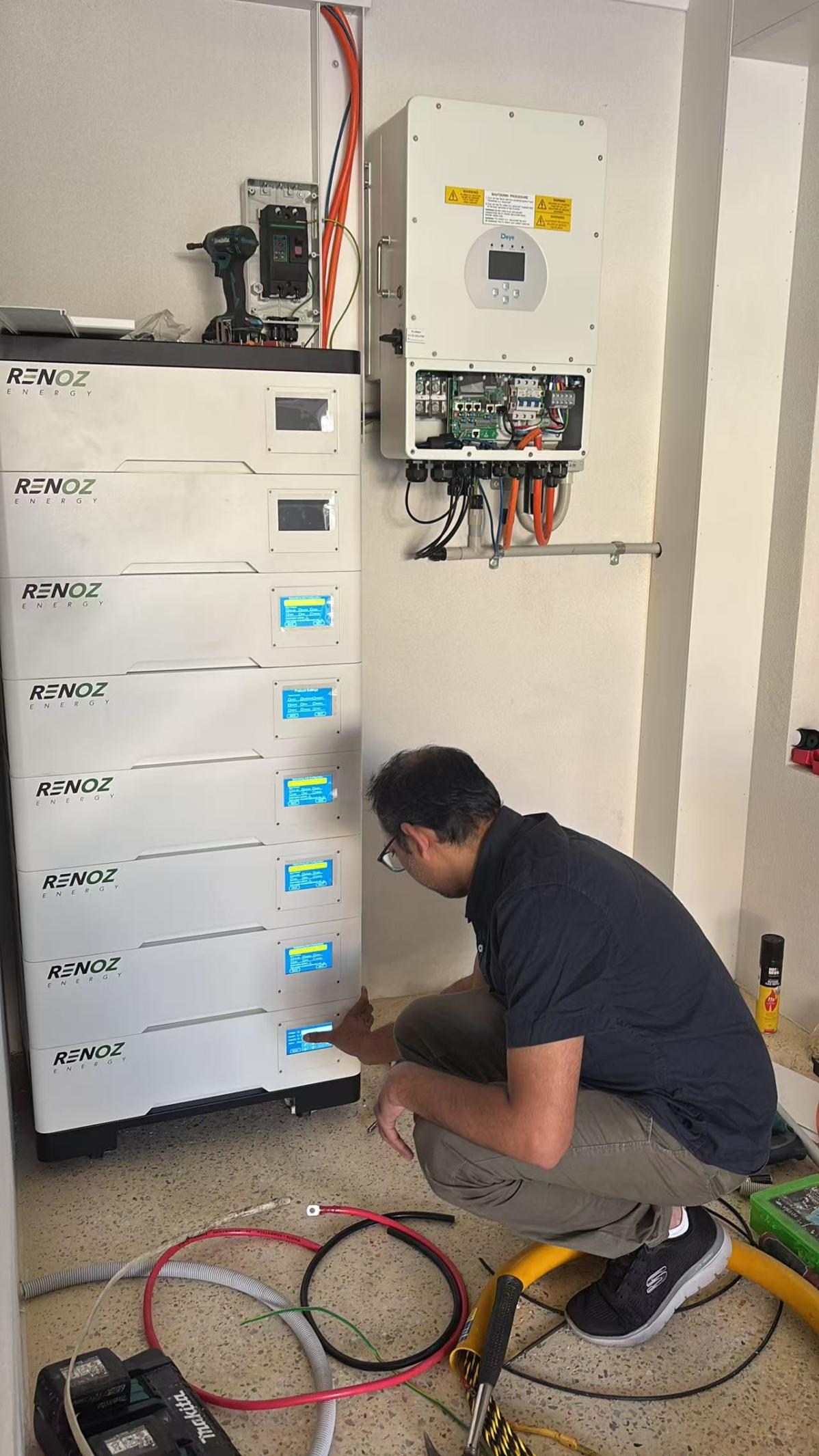
Check 1 — Certifications you can read, not logos you can recognise
Every supplier page shows a row of small certification badges. Almost none of them tell you whether the certificate covers the model you are actually buying.
Ask for three documents and match them against the SKU on the quotation:
UN38.3 test summary for transport. Air and sea freight both depend on it, and a summary is not the same as the full test report — ask which one they hold.
IEC 62619 for safety of industrial lithium cells and batteries. This is the baseline most European buyers expect for stationary storage.
UL 1973 if you sell into North America, and UL 9540 when the pack is part of a listed system.
Then check the details that reveal whether the document is real: the certificate holder name, the model designation, the issuing lab, and the expiry date. A certificate naming a 100 Ah wall unit does not cover a 280 Ah rack module. This mismatch is one of the most common failures found at audit.
Red flag: a certificate where the model number does not appear anywhere in the product documentation, or a supplier who sends a photo of a badge when you ask for the PDF.
Check 2 — Cell traceability: which cell, which batch, which date code
A PACK is an assembly. The cells inside it decide almost everything about how it ages. Ask a direct question: Can you tell me the cell manufacturer, the model, and the production date code for the batch in my order?
A serious supplier answers without hesitation and can show the incoming inspection record. A trading company usually cannot, because it never sees the cells.
Three things are worth confirming:
Cell grade. A-grade cells with a documented test record, or "equivalent grade" with no record at all.
Batch consistency. Whether the cells in one PACK come from a single batch. Mixed batches inside one pack are a quiet source of early imbalance.
Change notification. Whether they will tell you before switching cell supplier or model. Undisclosed cell substitution is the single most common cause of a specification quietly drifting between the sample and the third container.
Red flag: "We use the best cells, don't worry." That sentence is the whole answer.
Check 3 — BMS behaviour under the conditions you actually install in
The BMS is where cheap packs reveal themselves, and it is the hardest part to inspect from a datasheet. Ask for the communication protocol list, then ask whether it has been tested with the inverter brands you install.
What to verify:
Protocol and pinout. CAN and RS485 are standard; ask for the document that maps them, not just the claim.
Closed-loop compatibility with your inverter shortlist. Ask for a compatibility table with model numbers and firmware versions.
Protection thresholds for over-voltage, under-voltage, over-temperature and current limits, and whether they are adjustable.
Firmware update path. Can you update it in the field, or does every unit have to come back?
Red flag: "Fully compatible with all inverters." Nothing is compatible with all inverters. A supplier who says this has not tested it.
Check 4 — Climate performance: ask for the curve, not the headline number
Datasheets quote capacity at 25 °C. Buyers install in places where it is not 25 °C. If you sell into cold or hot regions, the discharge curve is the only honest document.
Ask for three things:
Discharge capacity at the temperature extremes of your market, plotted, not summarised as a percentage.
Charging limits below freezing, including whether charging is blocked, derated, or handled by pack heating.
Cycle life with the test conditions stated — depth of discharge, temperature, C-rate, and the capacity retention threshold. "6,000 cycles" without conditions is a marketing number.
This is also where chemistry choices matter. LFP is the default for stationary storage. Sodium-ion is worth a serious look for cold-climate markets and for buyers who care about supply-chain independence, but it should be judged on the same curve, not on the chemistry name.
Check 5 — What happens between assembly and shipment
Ask for a walkthrough of the quality process in the order it happens, and ask what percentage of units gets fully tested versus sampled.
A credible sequence looks like this: incoming cell inspection, module assembly with torque and weld records, 100% aging or charge-discharge screening, high-potential and insulation test, BMS configuration and communication check, then pack-level charge before shipment. Ask how long the aging step runs and what data is retained per serial number.
The specific question that separates factories from assemblers: Can you send me the test record for a specific serial number after delivery? If the answer is no, there is no data trail, which means there is no meaningful warranty either.
Check 6 — Commercial terms that survive scale-up
First orders are easy. The terms that matter are the ones in container three.
|
Term |
What to ask |
Reasonable answer |
Warning sign |
|
MOQ and sampling |
Minimum order, and can I buy one sample unit at a premium first? |
Sample available, cost credited against the first bulk order |
No sample path except a full container |
|
Lead time |
Days from deposit to readiness, and from sample approval to bulk |
Stated as a range, with the constraint named |
A single number with no caveat |
|
OEM / ODM scope |
What can I change: label, enclosure, BMS settings, packaging, app? |
A written matrix of what is free, what is charged, what is not offered |
"Anything you want" |
|
Price validity |
How long does the quote hold, and what triggers a re-quote? |
A stated window plus the cell-price mechanism |
Quotes that expire in silence |
|
Warranty |
Years, what is covered, who pays freight, what voids it |
Written terms, BMS included, prorated or replacement |
Warranty that excludes the electronics |
|
Payment |
Deposit and balance structure, and accepted instruments |
Standard split with documents released against balance |
Full prepayment to a personal account |
Check 7 — Documentation and after-sales, before you need them
Ask for the document pack that ships with the goods, and read it as if you were the installer on site at 6 pm.
Installation manual in the languages of your market, with torque values, cable sizes and clearances.
Nameplate and warning labels compliant with the destination market.
Declaration of conformity, and the battery passport or carbon-footprint documentation your market will require.
A named after-sales contact, response-time commitment, and the spare-parts path.
Red flag: a manual that is obviously machine-translated, or a support address that is a generic info@ mailbox with no named owner.
What to prepare before you ask for a quote
Suppliers respond better, and quote faster, when you arrive with specifics. Prepare six things and you will get comparable answers instead of three different offers.
Target market and the compliance regime that applies to it.
Capacity range and form factor: wall-mounted, rack, or floor-standing.
Annual volume estimate, even if rough, plus first-order size.
Inverter brands already installed by your team.
Operating conditions: temperature range, indoor or outdoor, backup or self-consumption.
What you need changed: your label, your packaging, your app, your enclosure.
Questions buyers ask us most
How long should a supplier shortlist take?
Two to three weeks is realistic if you run the first three checks in parallel. Most of that time is waiting for documents, not evaluating them.
Is a trading company always a bad choice?
No. A good trading company with real factory access, documented audits and stock can be faster than a factory for small orders. The problem is not the trading model, it is the inability to produce test records and change notifications, which is what checks two and five expose.
What is the most common reason a first order succeeds and the third fails?
Undisclosed substitution. A cell model, a BMS board or a connector changes between batches without notification, and the specification quietly drifts away from the sample that was approved. Put change notification in writing before the first PO.
Should I require a third-party inspection?
For a first bulk order, yes. A pre-shipment inspection that includes a functional test on a sample of units costs a fraction of one container and catches most of what a video tour misses.
How do I compare quotes that use different capacities?
Normalise to usable kWh at the temperature of your market, then compare landed cost including freight, duty and certification. A quote that looks 8% cheaper per unit often loses once the usable capacity at low temperature is taken into account.
Where we fit
Shandong Huison Electronics Technology manufactures LFP and sodium-ion home battery PACKs at Zaozhuang city Shandong province, with 500MWh of assembly capacity and 20000 packs shipped to Australia and USA market in 2025. Certifications held for the models we quote. Test records are available per serial number, and change notification is part of the supply agreement.
If you are running this shortlist now, send us the six items above and we will reply with the document pack first and the price second.
